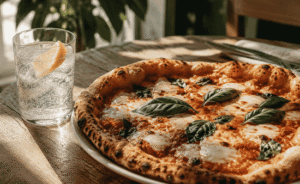
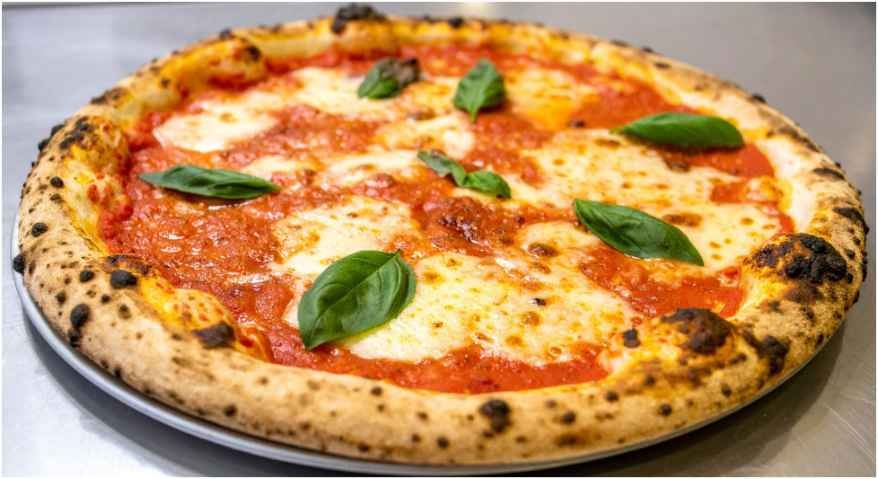
I wanted homemade Neapolitan pizza without pizza oven to taste smoky, airy, and blistered, not like a flatbread pretending to be pizza. The trick is not owning fancy equipment. The trick is stacking heat in the right order.
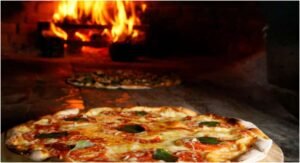
Traditional Neapolitan pizza depends on a soft, raised cornicione, simple dough, and fast high-heat cooking. AVPN describes true Neapolitan pizza as round, soft, fragrant, and finished with a raised edge around 1–2 cm. It also lists a simple dough base of water, salt, yeast, and flour.
A home oven cannot copy a wood-fired oven perfectly. A skillet and broiler can still get close enough to make a weeknight pizza feel special.
Why the Skillet-Broiler Method Works
A normal oven usually tops out around 500°F. Neapolitan pizza wants fierce heat from below and above. That is why a pizza stone alone often disappoints. The bottom cooks slowly, the cheese leaks, and the crust turns dry before it blisters.
The skillet method fixes the bottom first. Serious Eats uses a hot 12-inch skillet and notes that the pan can reach about 500°F to 600°F before the dough goes in. Their method also shows how a skillet can puff the dough fast, char the base, and melt the mozzarella with controlled heat.
My favorite home version adds the broiler. The skillet gives the base quick contact heat. The broiler blasts the rim and cheese. Together, they create the closest home version of a blistered Neapolitan-style crust without buying a backyard oven.
The Home Heat Stack That Makes the Difference
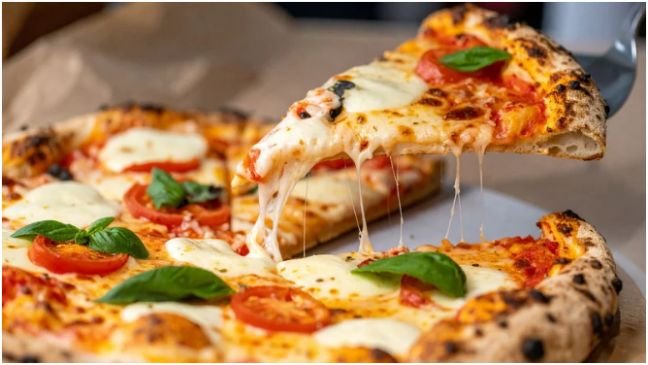
I use a simple rule: hot pan, dry toppings, fast finish. If one part fails, the pizza tastes heavy.
Use a Heavy Skillet for Bottom Char
Cast iron is the easiest choice because it holds heat well. Stainless steel can work, but thin pans lose heat too fast. A 10- or 12-inch skillet gives the dough enough room to stretch without becoming too thin.
Preheat the skillet until it is properly hot. A drop of water should bead and skate across the surface. That tells me the pan is ready for dough, not just warm metal.
Use the Broiler for Puff and Leopard Spots
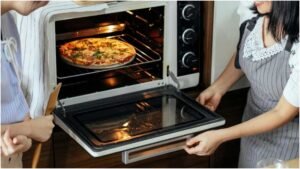
Place your oven rack near the broiler before cooking. The pizza should sit close enough to blister, but not so close that the rim burns in ten seconds.
This is where homemade Neapolitan pizza without pizza oven becomes more about timing than tools. Watch the pizza like a hawk. The top can go from pale to perfect quickly.
Keep the Toppings Light
Neapolitan-style pizza is not built for heavy cheese blankets or thick sauce. Use a thin layer of crushed tomatoes, small pieces of mozzarella, a few basil leaves, and olive oil.
Fresh mozzarella has extra moisture, so I tear it early and pat it dry. If the cheese releases too much whey, the center gets soupy. For a deeper cheese fix, use the internal guide on .
Ingredients for Neapolitan-Style Pizza at Home
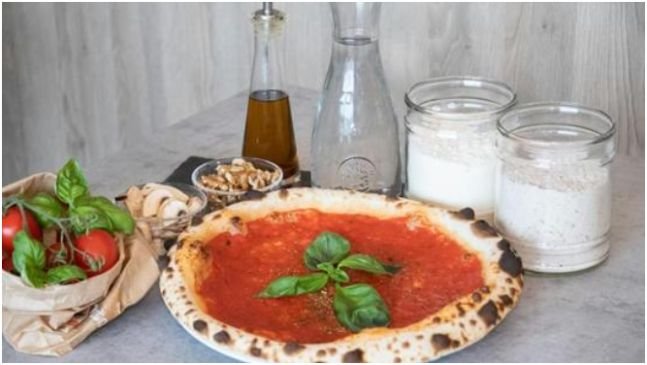
For four small pizzas, I use 520 grams of Tipo “00” flour or good all-purpose flour, 350 milliliters of water, 9 grams of fine sea salt, and 2.5 grams of active dry yeast.
For toppings, I keep it classic. Use one 14- to 15-ounce can of whole peeled Italian tomatoes, 8 ounces of fresh mozzarella, fresh basil, extra-virgin olive oil, and a little salt.
San Marzano tomatoes are excellent, but they are not mandatory. The bigger mistake is using cooked pasta sauce. It tastes too sweet and heavy for this style.
How to Make the Dough Without Stress
Mix the flour and salt in a large bowl. Dissolve the yeast in water, then stir it into the flour until no dry patches remain. Knead for 8 to 10 minutes, or use a no-knead rest if you prefer less work.
Serious Eats uses a no-knead dough that rests for 8 to 16 hours, then gets divided into four balls and rises again for two hours. That structure works well because time builds texture without complicated technique.
Cold Ferment or Same-Day Dough?
A cold ferment gives better flavor. If I plan ahead, I refrigerate the dough for 24 to 48 hours. The crust tastes deeper, and the dough stretches with less fighting.
For same-day pizza, I let the dough rest at room temperature for 8 to 10 hours. It will still work, but the flavor will be milder.
Why You Should Stretch, Not Roll
Rolling crushes the air out of the edge. That air is what creates the puffy cornicione. I press the center gently, push air toward the rim, then stretch the dough over my knuckles.
Aim for a 9- to 10-inch round. A smaller pizza cooks faster and gives better results in a home skillet.
How to Cook Homemade Neapolitan Pizza Without Pizza Oven
Start with the skillet on high heat. Once the pan is very hot, place the stretched dough inside. Cook it for about 60 to 90 seconds, until the bottom begins to spot and the top starts bubbling.
Add a thin layer of crushed tomato, then mozzarella to get pizza cheese to melt perfectly, basil, salt, and olive oil. Move fast. The longer the dough sits in the pan before broiling, the more the base can toughen.
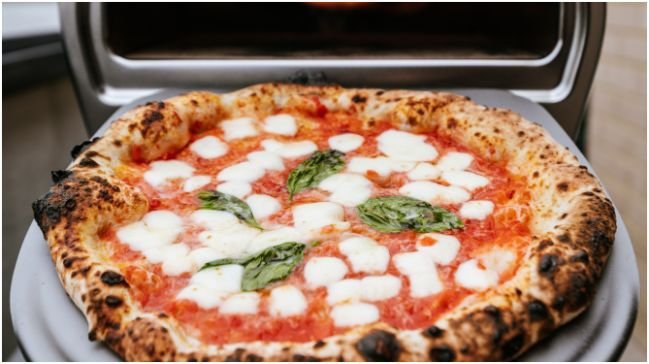
Transfer the skillet under the broiler. Broil for 1 to 3 minutes, turning the pan if one side browns faster. Pull it out when the rim has dark freckles, the cheese has melted, and the sauce looks glossy.
This is the key moment. homemade Neapolitan pizza without pizza oven should look rustic, not uniform. A few charred spots are good. A dry, cracker-like crust means it cooked too long.
Mistakes That Ruin the Crust
The most common mistake is using too much sauce. Two or three tablespoons are enough for a small pizza. More sauce traps steam and softens the center.
Cold dough is another problem. Dough straight from the fridge resists stretching and cooks unevenly. Let it sit at room temperature until relaxed.
Wet mozzarella can also wreck the texture. Tear it, drain it, and blot it before topping. If your fresh mozzarella still feels too wet, mix it with a little low-moisture mozzarella.
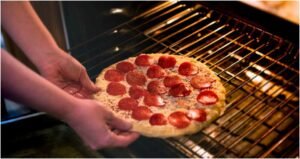
Do not overload the pizza. Pepperoni, mushrooms, sausage, and vegetables all add moisture or fat. Master the Margherita first, then experiment.
How to Store and Reheat Leftover Pizza
Pizza tastes best right away, but leftovers happen. Refrigerate perishable foods quickly. The FDA recommends keeping the refrigerator at or below 40°F and following the two-hour rule for foods that need refrigeration.
For reheating, use a skillet over medium-low heat. Cover it for one minute to soften the cheese, then uncover it to crisp the base. USDA guidance says leftovers should reach 165°F when reheated.
Avoid the microwave unless you are desperate. It softens the crust and makes the cheese rubbery.
FAQs
1. Can I make homemade Neapolitan pizza without pizza oven in a regular oven?
Yes, but a skillet plus broiler gives better bottom char and faster top browning than a plain baking sheet.
2. What flour is best for Neapolitan-style pizza at home?
Tipo “00” flour is ideal, but high-quality all-purpose flour works well for skillet pizza.
3. Can I use store-bought pizza dough?
Yes, let it reach room temperature first so it stretches easily and cooks evenly.
4. How do I get leopard spots on pizza crust at home?
Use a very hot skillet, keep the toppings light, and finish the pizza close to a hot broiler.
Final Slice: Make the Skillet Do the Drama
A pizza oven is fun, but it is not the gatekeeper of great pizza. Once I learned to heat the skillet hard, dry the mozzarella, and use the broiler like a finishing torch, the results changed fast.
Make the dough ahead, keep the pizza small, and do not bury it under toppings. That is the easiest path to homemade Neapolitan pizza without pizza oven that actually feels worth repeating.